
Diploma in Cloud Infrastructure, DevOps and Cyber Security Engineering
- Live online Class
- 518 Learners
Program Description
Long Description
Diploma in Cloud Infrastructure, DevOps and Cyber Security Engineering
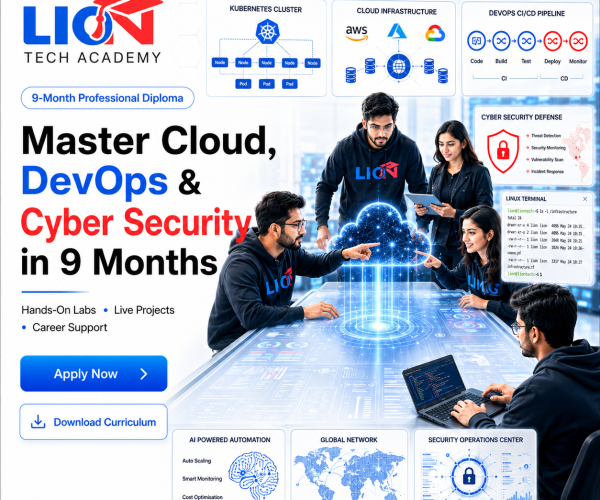
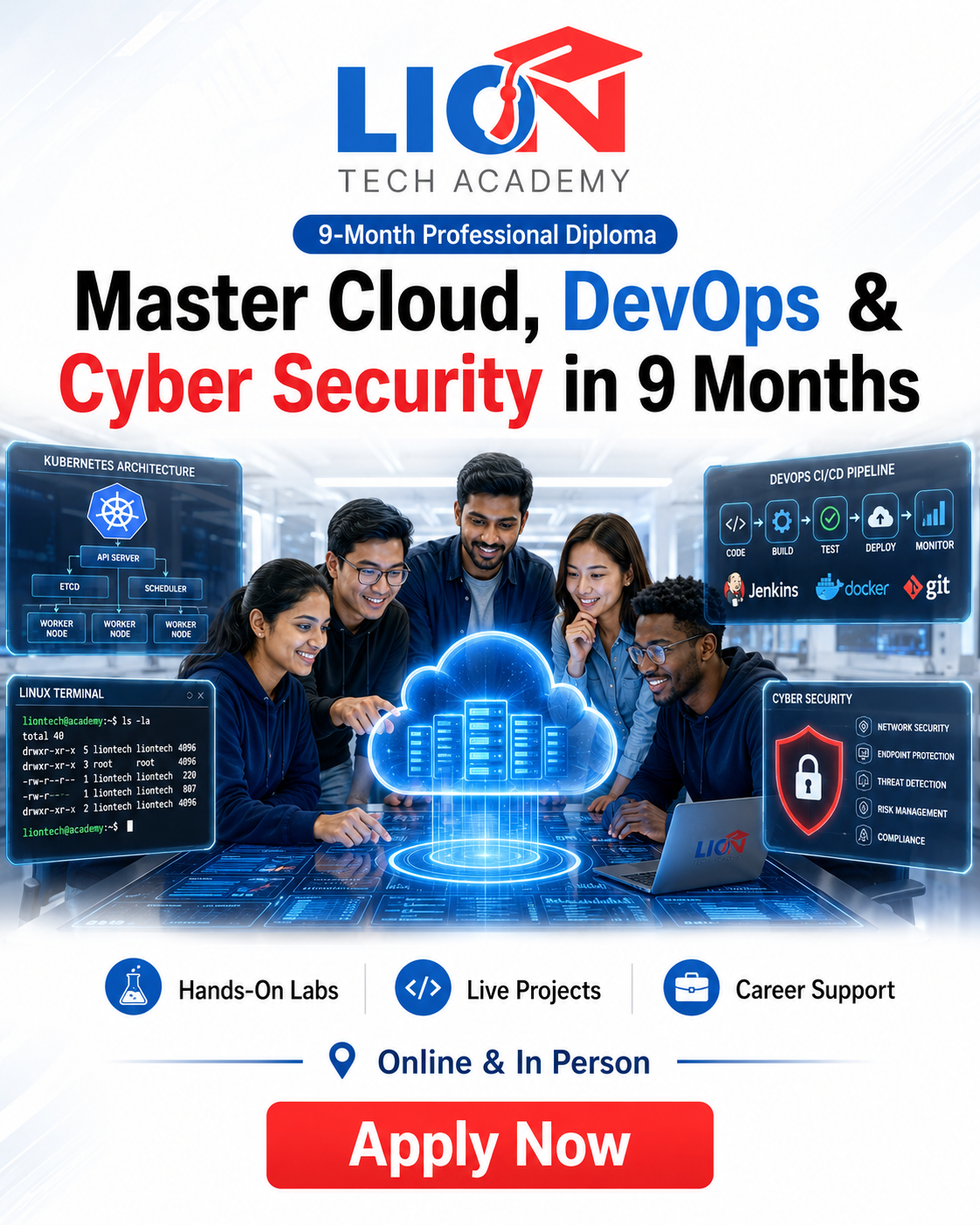
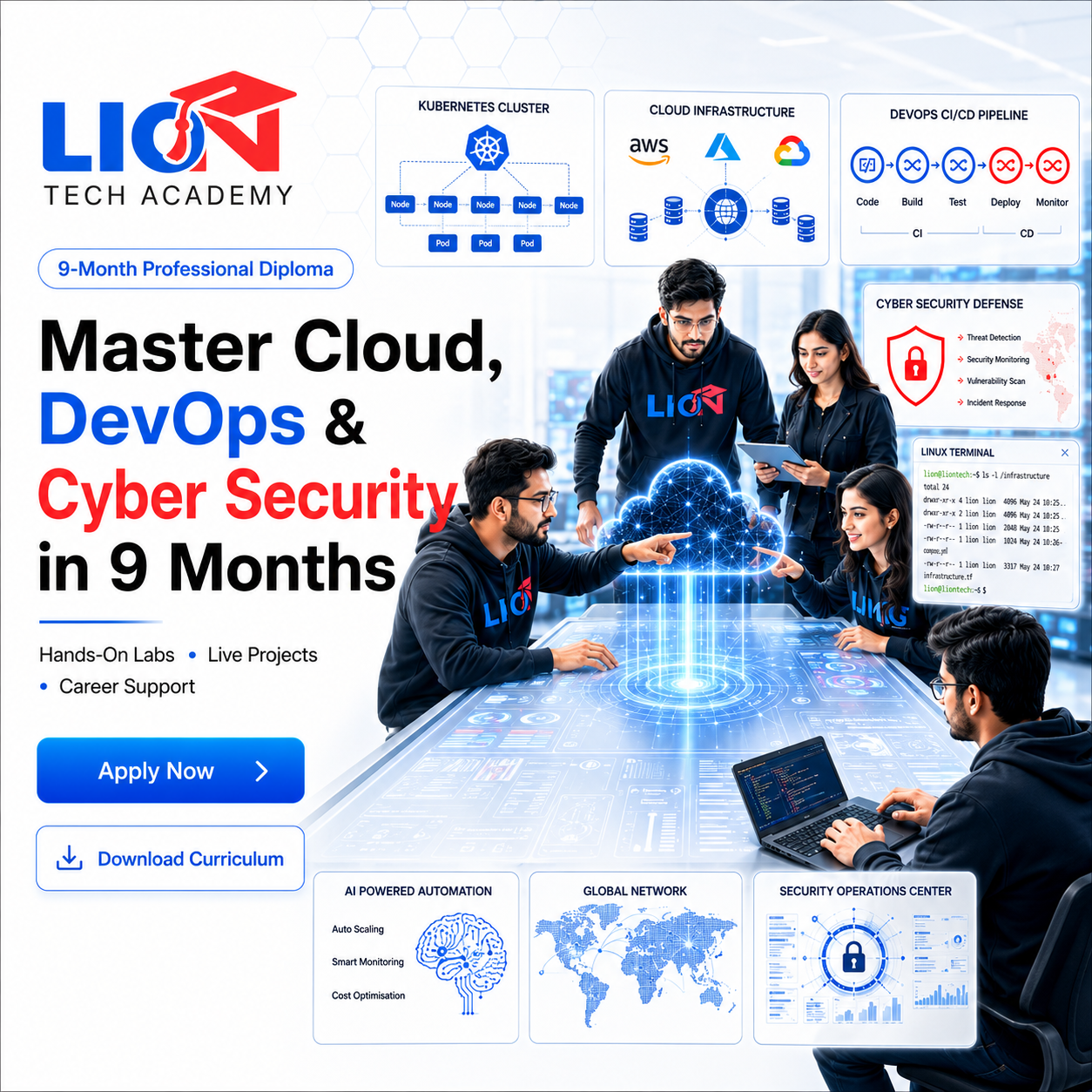
The Diploma in Cloud Infrastructure, DevOps and Cyber Security Engineering is a comprehensive 9-month professional training program designed to prepare students for modern IT infrastructure, cloud operations, automation engineering, and cyber security careers.
As organizations rapidly migrate to cloud-native platforms and automated infrastructure systems, the demand for professionals who can deploy, secure, automate, monitor, and manage enterprise environments continues to grow worldwide. This diploma equips students with the practical technical skills required to operate in modern DevOps and cyber security ecosystems using industry-standard technologies and real enterprise workflows.
Throughout the program, students learn how to build scalable cloud infrastructure, automate deployments, secure enterprise systems, implement CI/CD pipelines, manage Kubernetes environments, monitor production systems, and protect organizations against modern cyber threats.
The curriculum combines:
- Cloud Computing
- Linux System Administration
- DevOps Engineering
- Infrastructure as Code (IaC)
- Containerization & Kubernetes
- CI/CD Automation
- Cloud Security
- Cyber Security Operations
- Monitoring & Observability
- AI-Assisted DevOps Workflows
- Real-World Capstone Projects
Students gain hands-on experience with leading technologies including:
- AWS
- Microsoft Azure
- Linux
- Docker
- Kubernetes
- Terraform
- Jenkins
- GitHub Actions
- Ansible
- Prometheus
- Grafana
- ELK Stack
- SonarQube
- Nexus Repository
- NGINX
- Python
- Bash Scripting
- Security Tools & SIEM Platforms
The program emphasizes practical implementation through:
- live instructor-led sessions
- guided labs
- enterprise simulations
- real infrastructure deployments
- cloud security exercises
- cyber incident response scenarios
- DevSecOps workflows
- portfolio-building projects
By the end of the diploma, students will be able to:
- Design and deploy cloud infrastructure
- Build automated CI/CD pipelines
- Secure cloud and on-premise systems
- Manage Kubernetes clusters
- Implement Infrastructure as Code (IaC)
- Monitor enterprise systems and applications
- Perform vulnerability assessments
- Automate deployments and operational tasks
- Integrate security into DevOps pipelines
- Troubleshoot production environments
- Build scalable and resilient cloud-native systems
Program Outline
Month 1: IT, Linux & Networking Foundations
Students build the foundation required for cloud, DevOps and cyber security.
Topics:
- Computer systems fundamentals
- Linux operating system
- Command line navigation
- File systems and permissions
- Users and groups
- Networking fundamentals
- TCP/IP, DNS, HTTP, SSH
- Basic troubleshooting
- Bash scripting basics
Project:
Configure and secure a Linux server for remote administration.
Month 2: Cloud Computing Foundations
Students learn cloud concepts and deploy basic infrastructure.
Topics:
- Cloud computing models
- AWS and Azure overview
- Virtual machines
- Storage services
- Networking in the cloud
- Identity and Access Management
- Security groups and firewalls
- Cloud cost awareness
Project:
Deploy a secure virtual server and host a basic application in the cloud.
Month 3: Git, Automation & CI/CD Foundations
Students learn version control and deployment automation.
Topics:
- Git and GitHub
- Branching strategies
- Pull requests
- Build automation
- CI/CD concepts
- Jenkins basics
- GitHub Actions
- Pipeline stages
- Testing and deployment workflows
Project:
Build an automated CI/CD pipeline for a sample application.
Month 4: Docker & Containerization
Students learn how modern applications are packaged and deployed.
Topics:
- Containers vs virtual machines
- Docker images
- Dockerfiles
- Docker Compose
- Container networking
- Volumes
- Image registries
- Secure image practices
Project:
Containerize a web application and deploy it using Docker Compose.
Month 5: Kubernetes & Cloud-Native Operations
Students learn container orchestration and production deployment patterns.
Topics:
- Kubernetes architecture
- Pods, deployments and services
- ConfigMaps and secrets
- Ingress
- Persistent storage
- Namespaces
- Scaling
- Rolling updates
- Basic troubleshooting
Project:
Deploy a containerized application to Kubernetes with service exposure and scaling.
Month 6: Infrastructure as Code & Configuration Management
Students automate infrastructure provisioning and server configuration.
Topics:
- Infrastructure as Code concepts
- Terraform
- Providers and modules
- State management
- Variables and outputs
- Ansible
- Playbooks
- Server configuration automation
- Environment provisioning
Project:
Provision cloud infrastructure with Terraform and configure servers with Ansible.
Month 7: Monitoring, Logging & Site Reliability
Students learn how teams monitor and maintain production systems.
Topics:
- Monitoring fundamentals
- Prometheus
- Grafana
- Metrics
- Logs
- Alerts
- ELK Stack fundamentals
- Incident response basics
- Reliability principles
- Performance troubleshooting
Project:
Build a monitoring dashboard with alerts for cloud infrastructure and applications.
Month 8: Cyber Security & DevSecOps
Students learn how to secure systems and integrate security into pipelines.
Topics:
- Cyber security fundamentals
- Linux hardening
- Network security
- Cloud security
- Vulnerability scanning
- Secrets management
- Secure CI/CD
- DevSecOps workflows
- Log analysis
- Incident response
- SIEM fundamentals
Project:
Build a DevSecOps pipeline with security scanning and cloud security controls.
Month 9: Final Capstone & Career Preparation
Students complete a professional portfolio project and prepare for employment.
Topics:
- Final project planning
- Cloud architecture design
- Infrastructure automation
- CI/CD implementation
- Security hardening
- Monitoring setup
- Technical documentation
- Resume optimization
- LinkedIn optimization
- Mock interviews
- Portfolio presentation
Final Capstone:
Design, deploy, automate, monitor and secure a complete cloud-native application environment.

Programs Videos
Programs Videos
Benefits
Exam and Certification
The program also prepares students for globally recognized certifications including:
- AWS Certified Cloud Practitioner
- AWS Solutions Architect Associate
- Microsoft Azure Fundamentals (AZ-900)
- Docker Certified Associate
- Certified Kubernetes Application Developer (CKAD)
- CompTIA Security+
- Certified DevOps Fundamentals
Career Opportunities
Career Opportunities
Graduates of this diploma program can pursue roles such as:
- Cloud Infrastructure Engineer
- DevOps Engineer
- Site Reliability Engineer (SRE)
- Cloud Support Engineer
- Platform Engineer
- Kubernetes Administrator
- Cyber Security Analyst
- DevSecOps Engineer
- Systems Administrator
- Security Operations Analyst (SOC Analyst)
- Infrastructure Automation Engineer
- Cloud Security Engineer
Reviews
Lecturers





FAQs
The live zoom training usually takes 2 to 3 months to complete.
Our training programs are 100% online via the zoom platform. So, you can study from any part of the world with simply a laptop connected to the internet.
Yes. You may get a refund within 7 days of payment. You will not get a refund if the refund is requested after 7 days. If you have already gone more than 20% or more into the training, you may only be refunded part of the fees.
Lion Tech Academy does not offer certification, but we prepare you to write accredited certification exams. We however give you an end-of-program certificate.
Our program content is diversified and include explanatory videos, screen recording videos, text, images, illustrations, infographics, and more.
Yes. There are so many high-paying jobs for IT professionals. We help you land your dream job, usually not long after training.
Yes. We offer mentorship through our several online community forums.
Related Programs
Contact Us
- 647 614 8836